**One morning
the fox came down the hill, glittering and confident,
and didn’t see me — I thought:
so this is the world.
I’m not in it.
It is beautiful.**
Mary Oliver, “October”, in Wild Geese
Bede Griffiths talks about the West-ification of the Christian Church:
“Often, looking down on the scene at a railway platform, I have thought that it looked like a flower-garden, the women with their brightly-coloured saris sitting in circles here and there, the children running about with movements and gestures of spontaneous joy. … this is not a merely animal life and beauty, it has the grace of human intelligence. They live from the unconscious, but it is the human unconscious, what Jung has called the anima [feminine] as opposed to the animus [masculine]**.
“The present system of industrialism in the West is the product of the violent, aggressive, rational mind of the West — whether organised in a capitalist or a socialist system makes no difference, except that the latter tends to be more oppressive and inhuman — which can only lead to the destruction of the ancient cultures of the East. Yet it still remains possible to conceive of a development of science and technology which would seek not to dominate nature in the style of the West but to work with nature, building up from the basis of the village economy, as Mahatma Gandhi sought to do, and so create a new culture, in which man and nature, reason and intuition, the Yang and the Yin in Chinese terms, would be brought into harmony. But there is something more** [found in the East] … This is what I had come to India to find, this contemplative dimension of human existence, which the West has almost lost and the East is losing. … that hidden depth of existence, springing from the depth of nature and the unconscious, penetrating all human existence and going beyond into the mystery of the infinite and eternal… that hidden Power which pervades both man and nature and reveals to those who are attuned to it the real meaning of human existence. … the presence of God in man and nature.”
Bede Griffiths, “The Discovery of India”, in The Marriage of East and West
A description of the inventive and yet humane can be found in Jean Liedloff’s studies of the Yequana people:
“[The playpen] was nearly finished when I noticed Tududu working on it. It had upright sticks lashed with vines to an upper and a lower square frame, like a strip-cartoon version of a prehistoric playpen. It had cost a good deal of labour, and Tududu looked quite pleased with himself when he lopped off the last protuberant stick end.

He cast about for Cananasinyuwana, his son, who had taken his first step about a week earlier. No sooner had Tududu sighted the tot than he snatched him up and put him triumphantly in the new invention. Cananasinyuwana stood uncomprehending for a few seconds at the centre, then made a move to one side, turned about and realized that he was trapped. In an instant he was screaming a message of utter horror, a sound rarely heard from children of his society. It was unequivocal. The playpen was wrong, unsuitable for human babies. Tududu’s continuum sense, as strong as any Yequana’s, did not hesitate in interpreting the shrieks of his son. He pulled him out and let him run away to throw himself upon his mother for the minutes he needed to counteract the shock before he was ready to go out again to play. Tududu accepted the failure of his experiment without question: after a moment’s last look at his handiwork, he smashed the playpen to bits with an axe, and as the wood he had used was green, he did not gain so much as a pile of firewood from his morning’s efforts. I have no doubt that it was neither the first nor the last such invention by a Yequana, but their continuum sense would never permit so patent an error to last long. If our continuum sense had not been so elemental a force in human behavior for our two million years of stability, it would not have been able to contain the dangers inherent in our highly developed intellect. That it has lately been disempowered to the point where instability, or ‘progress’, appears to us to be our ever more glorious destiny does not alter one jot the fact that the continuum sense is intrinsic to our very humanness. Tududu smashing the playpen is what we are evolved to be, what we would have continued to be had our sense remained unclouded, unbetrayed by whatever derailed it, leaving us so much in the dangerously ignorant hands of the intellect.”
Continuum Concept — In Search of Happiness Lost, 83-84, by Jean Liedloff
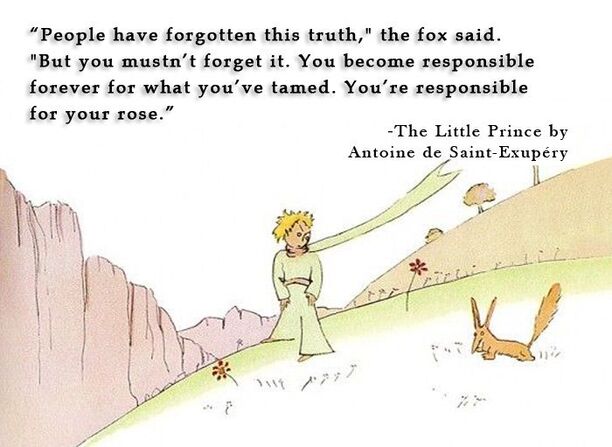
The experiment has failed but we do not have the “sense” to see how we are killing ourselves, our children, and our world?
What happens when we see it? When, like Mary Oliver, we see the fox and realise it lives in the world but we don’t? How do we live in this life where we do not live, this life which is not one. How do we endure? Then, we are on the path of crucifixion, where there is no salvation until we are all, in one body, able to refuse to crucify God. An impossible transformation, metanoia, of all that is hardened in us, individually and collectively, possible only in Christ. And yet, even he has no power to change us. Christ looks at us and loves us, the rich man, and doesn’t persuade or cajole, even when he can see our pain. Even when our pain is there because we can see, Christ doesn’t extinguish our misery. He can’t, until we are united. Here is a poem from St John of the Cross:
How do you endure
O life, not living where you live,
And being brought near death
By the arrows you receive
From that which you conceive of your Beloved?Why, since you wounded
this heart, don’t you heal it?
And why, since you stole it from me,
Do you leave it so,
And fail to carry off what you have stolen?
Extinguish these miseries,
Since no one else can stamp them out;
And may my eyes behold you
Because you are their light,
And I would open them to you alone.
St John of the Cross, Spiritual Canticle, stanzas 8-10
Lillian G Harvey speaks of her journey in Christ in her foreword to her book, Loneliness, written by herself and her late husband, Edwin:
“Edwin and I spoke often to one another of the great need of emphasising the unpopular truth that Jesus so faithfully taught His followers that ‘all’ who would live godly would suffer persecution. He told His disciples that they would be put out of the synagogue and even dared to foretell martyrdom. … we, ourselves, must needs suffer if our words were to touch deeply the chords within the heart of a suffering humanity. The last years of our lives together have been ones of poignant suffering. The closer we have endeavoured to live to God, and the more we sought to live out our convictions, the greater the misunderstanding.
Foreword, Loneliness, by L Harvey.
**“ ‘By faith Moses chose to suffer affliction… rather than enjoy the pleasures of sin for a season; esteeming the reproach of Christ greater riches than treasures’ (Hebrews 11: 24-26)
“It is often asked, ‘How can a God of love permit or even plan acute and often prolonged suffering to those who serve Him?’ We reply that God Who allowed His beloved Son to pass through the most poignant suffering ever recorded, also permits His servants to endure because the blessed fruit of devoted suffering far outweighs the comparatively ‘light affliction which is but for a moment.’ ”**
“Purpose of Loneliness”, in Loneliness, by E and L Harvey.
**We who follow the Crucified are not here to make a pleasant thing of life; we are called to suffering for the sake of a suffering, sinful world.
“ ‘His brow was crowned with thorns; do we seek rosebuds for our crowning?
“ ‘His hands were pierced with nails; are our hands ringed with jewels?
“ ‘His feet were bare and bound; do our feet walk delicately?
“ ‘What do we know of travail?—of tears that scald before they fall?—of heartbreak?—of being scorned?
“ ‘God forgive us that so often we turn our faces from a life that is even remotely like His, enjoying our possessions on earth. ‘Whosoever doth not bear his cross and come after me cannot be my disciple.’ ” — Amy Carmichael.**
“Alone in the Wind for God”, in Loneliness, by E and L Harvey.
These are the human ways which we have chosen to captivate us, which we have been warned about:
“See to it that no one captivate you with an empty, seductive philosophy according to human tradition, according to the elemental powers of the world and not according to Christ. For in him dwells the whole fullness of the deity bodily, and you share in this fullness in him, who is the head of every principality and power.”
Colossians 2:8-10
We can learn from Christ, in the desert, how to respond to the temptations of an empty, seductive philosophy with discernment — even when it is the Word of God itself!
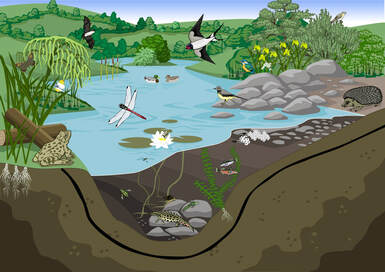
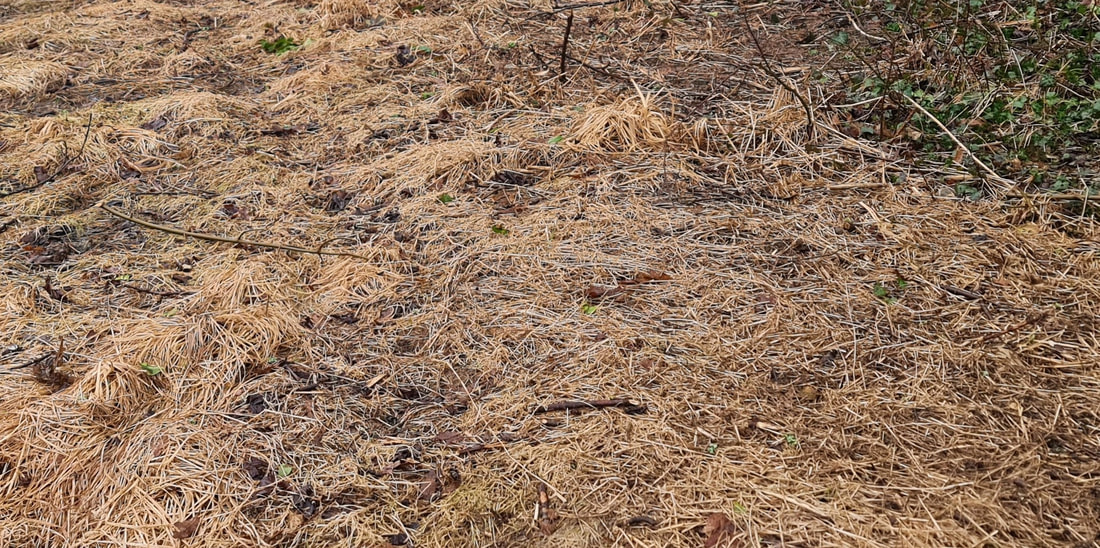
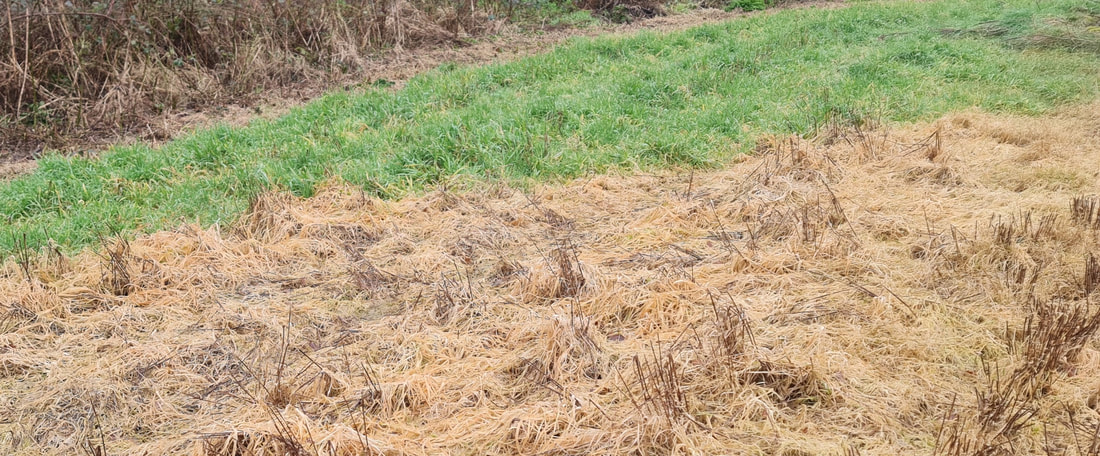
What is it that we are “preserving” humanity for? For regulation of what? Why do we want to “maintain”? (The question is the same for all of us as a body, just as it is for each of us in our own lives). We need to ask ourselves, as Jesus asks us in Matthew 16:26 and Mark 8:36, “What use is it to gain the whole world, but lose our souls?” Did the relentless imposition of industrial agriculture, urbanisation and agriculturalisation of land, fields replacing wilderness, sprayed year after year with the pesticides and herbicides “necessary” to grow crops to “feed the world”, turning the soil to an unhealthy green sludge, killing off all insect life, poisoning the ecosystem, death poured out daily, done in the name of maintaining lifeactually maintain life? No. We live in a world of death, we pollute everything we touch, we throw litter into paradise, the Garden of Jesus, we kill off all of nature, the habitats of everything we say we love, even of ourselves and our children, the very ground we stand on, the ground we eat from. We can’t even recognise these places as our habitat. We disown our own habitat and by trashing it, we prevent even those who can and do live there from living there, our fellow creatures. The beautiful fox, glittering and confident.
Here it is, we have paradise within and all around us, yet we do not live in the world. We have a collective incapacity to live here. Instead, we kill off God’s Creation meaning no-one else can live there either. Aren’t we doing exactly what Jesus condemns us for, which is usually only interpreted spiritually: locking the gates to the Kingdom so that not only do we not enter ourselves, but we prevent anyone else from entering?
**“Woe to you, scribes and Pharisees, you hypocrites. You lock the kingdom of heaven before human beings. You do not enter yourselves, nor do you allow entrance to those trying to enter.”
**Matthew 23:13
And when Jesus says “woe to you!” he means it. “Keep my decrees and laws, for the person who obeys them will live by them” (Leviticus 19:5). The person who doesn’t live by God doesn’t live by God, and what a terrible place that is to be.
None of us are exempt. Even if we see ourselves as doing more than other people in terms of living in the planet with love, we need to remember that there is no hierarchy of sin.
When Jesus called Judas “friend”, wasn’t he saying that we are all doing all we can. Jesus looked at the rich man and loved him (Mark 10:21). Within our capacity and knowledge, what other choices do any of us actually have except to be exactly who and what we are? Wouldn’t we choose to be with Love if we could? Jesus knows that. Our “fate” is not our business in so many ways. Except that it is.
What is the nature of sin? If we recognised the sin for what it was, in its entirety, and truly saw Christ, truely saw and fell at Christ’s feet, and did so forever, we’d be in eternity. We’d already be in heaven. We would have passed the death barrier. Until then, it’s a journey. We can’t be in heaven if we throw away rubbish into paradise, or even if we eat, since eating means giving life to ourselves because we gave death to something else (a leaf, a beansprout, a fish, a bird, an animal…). So no-one is exempt. Not exempt. Less and more impactful in the destruction, maybe. However, is being “less or more impactful” of interest to God? Not necessarily. The first son in the Parable of the Prodigal Son story was doing “everything right” but he did it without love (Luke 15:11-32), so, though he lives close to the Father, he doesn’t actually have the Father. He lives in a place of lack. As Paul says in 1 Corinthians 13:
“If I speak in human and angelic tongues but do not have love, I am a resounding gong or a clashing cymbal. And if I have the gift of prophecy and comprehend all mysteries and all knowledge; if I have all faith so as to move mountains but do not have love, I am nothing. If I give away everything I own, and if I hand my body over so that I may boast but do not have love, I gain nothing.”
1 Corinthians 13:1-3
When Jesus spoke the words of Matthew 23:13, **“Woe to you, scribes and Pharisees, you hypocrites. You lock the kingdom of heaven before human beings. You do not enter yourselves, nor do you allow entrance to those trying to enter”,**he was addressing not just the Pharisees but everyone it was relevant to, which is us all ! There are parts of us all that are “Pharisee” and parts of us that are “disciple”. Jesus, here, is talking to the “Pharisee” parts in us all. Nothing makes us exempt.
The Pharisee inside us is the spiritual inner fascist.
In order to understand Jesus, we have to face the “continuity” of fascism, our own inner fascists are showing up with the same Fascism as theFascism we see in all those “other” people (if our eyes are seeing things in this way), whether they operate in the spiritual or any other realm.
“Thus, we see that the analysis of the molecular components of fascism can deal with quite a variety of areas. It is the same fascism under different forms which continues to operate in the family, in school, or in a trade union. A struggle against the modern forms of totalitarianism can be organized only if we are prepared to recognize the continuity of this machine.”
Everybody Wants to be a Fascist, by Félix Guattari
It is the same fascism under different forms. The same machine. Spirit of fascism, shine on.
And Jesus calls us out for this fascism when he sees it.
He tells us a story,
“Two people went up to the temple area to pray; one was a Pharisee and the other was a tax collector. The Pharisee took up his position and spoke this prayer to himself, ‘O God, I thank you that I am not like the rest of humanity—greedy, dishonest, adulterous—or even like this tax collector. I fast twice a week, and I pay tithes on my whole income.’ But the tax collector stood off at a distance and would not even raise his eyes to heaven but beat his breast and prayed, ‘O God, be merciful to me a sinner.’ I tell you, the latter went home justified, not the former; for everyone who exalts himself will be humbled, and the one who humbles himself will be exalted.”
Luke 18:10-14
From this story, it is clear to see that we can all be fascists — especially those who are doingeverything right! All we can say to ourselves is that there is no “everything right”, because the moment we think there is, is the moment we fall into fascism.
As John of the Cross describes, we cannot and never can live entirely in this world created by God, until the time when we have full union with God. But even in those places where we cannot live with God, we can, and must, be with what is, which is to be in the pain of our separation. This is our way of being alive, and here, as Jesus taught us. In this way, we follow the way of life and truth that Jesus tells us is within us — in all its desolation and jubilance.
What gets us closer? Not condemnation. The only suggestion I can make is to follow Christ. Christ who, I would say, tells us, “You know the way. Just as I am the way, you are the way.” Or, in the words of OCCA Priest John Yoegel, “[God’s] words are already embedded in your hearts. I’ve come to remind you of that. Now go and live them.”
You might have your own words that speak this same truth. We have to find a way through in this life, our own way, with God. This was as true 2000 years ago as it is today, even though it is easy to feel the weight stacked up against us living a godly way. But, in actuality, God’s accompaniment of us now is no more difficult than it ever was, and nor is our ability to follow. The distance between God and us is everything, it is infinity.
Can you find out the depths of God?
or find out the perfection of the Almighty?
It is higher than the heavens; what can you do?
It is deeper than Sheol; what can you know?
It is longer than the earth in measure, and broader than the sea.
Job 11:7-9
We still have hope. Until we don’t.
Ruthie Baigent, 11th February 2025
“Isn’t it a good idea to discuss it freely while we still can?”
Everybody Wants to be a Fascist is an essay by Félix Guattari, published posthumously, and is available to download as a pdf below. This is a cleaned up version of what is available in Chaosophy:

| everybody-wants-to-be-a-fascist.pdf | |
| File Size: | 592 kb |
| File Type: |
Chaosophy (Texts and Interviews 1972 to 1977), the posthumous collection of texts and interviews by Félix Guattari, including Everybody Wants to be a Fascist, is freely available here: selforganizedseminar.wordpress.com/wp-content/uploads/2011/07/guattari_chaosophy.pdf